How to Buy Monero (XMR) With a Credit Ca...
2026-11-07

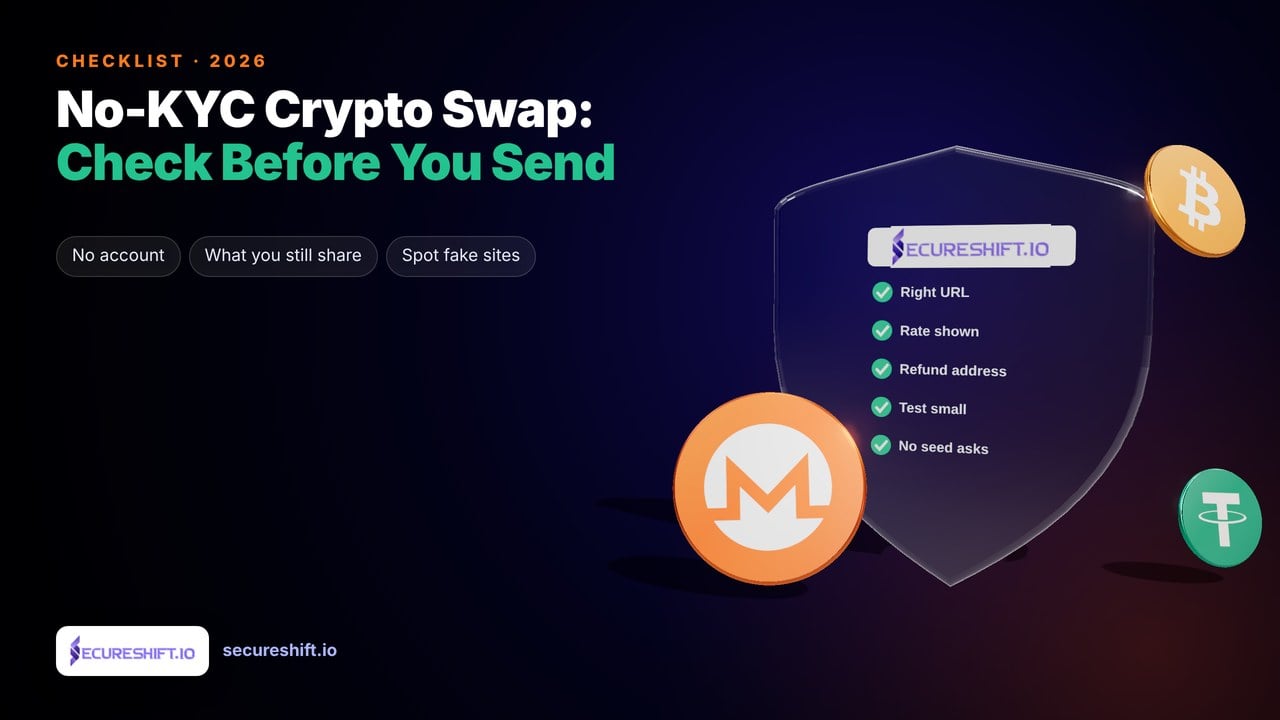
By the SecureShift Team · Updated November 7, 2026
Disclosure: SecureShift offers some of the services mentioned here. We cover alternatives too. This is educational content, not legal or financial advice.
A no-KYC swap converts one cryptocurrency into another without an account or ID upload. You give a receiving address, send a deposit, and get the new coin in your own wallet. It isn't "no rules": minimums, deadlines, network choice and risk screening still apply. Your source chain stays public.
| Exchange account | No-KYC swap | |
|---|---|---|
| Sign-up | Email, password, usually ID and selfie | None |
| Where coins sit | In the exchange's wallet until you withdraw | Sent straight to your wallet |
| Fiat (card/bank) | Usually yes | No, crypto-to-crypto |
| What the service keeps | Identity plus full trading history | Order details: addresses, amounts, timing |
On SecureShift, swaps need no registration, email or ID. The fee is built into the rate shown before you confirm. Our FAQ notes that unusual or high-risk activity can still trigger AML checks.
The rule of thumb: the less you hand over, the less there is to leak. Swap services have suffered data exposures before, which is why minimal-data services matter.

Keep your order page and transaction ID. Most delays come from network congestion or too few confirmations. Read why crypto swaps get delayed before you contact support, and always set a refund address so a failed swap comes back to you.
Try a small no-account swap: BTC to XMR · SecureShift DEX
A swap that converts one cryptocurrency to another without creating an account or verifying your identity. You provide a receiving address and send a deposit.
Not completely. The service sees your addresses, amounts and IP, and your deposit is public on its blockchain. Receiving Monero adds privacy on the receiving side.
No. SecureShift swaps need no registration, email or ID. Unusual or high-risk activity may still trigger AML checks.
No-account swaps are crypto-to-crypto. Buy a common coin with your card elsewhere first, which usually requires KYC, then swap it.
Type the URL or use a bookmark, never follow links from ads or DMs, and only send to the deposit address on your own order page.
Funds can be delayed or lost. Always match the network shown on the order, especially for USDT and USDC.