How to Buy Monero (XMR) With a Credit Ca...
2026-11-07

By the SecureShift Team · Updated November 7, 2026 · Monero facts checked against getmonero.org
Disclosure: SecureShift runs one of the services covered in this guide. We've included the other options too, including ones we don't offer, so you can pick what fits you best. This is educational content, not legal or financial advice.
The simplest way to buy Monero without KYC in 2026 is to swap a coin you already own (BTC, ETH, USDT, SOL, LTC…) for XMR on a no-account swap service, and have it paid straight to a Monero wallet you control. There's no sign-up and no ID upload, and most swaps finish in minutes to about half an hour. If you only have a card or a bank account, you'll need one extra step first (see below).
A few years ago you could buy Monero on most large exchanges. That has changed as regulators pushed exchanges away from privacy coins:
Where XMR is still listed, you'll pass full identity checks, and your Monero purchase is tied to your name in that exchange's records. That's the main reason people look for a no-KYC route.
Every no-KYC method below pays XMR to your address, so set up a wallet first. Common choices:
Download wallets only from their official sites or getmonero.org. Write your 25-word seed (or 16-word for Polyseed wallets) on paper and keep it offline. A standard Monero address starts with 4 and a subaddress starts with 8. Using a fresh subaddress for each purchase is free and keeps your incoming payments unlinkable.

| Method | You pay with | Typical time | Effort | Best for |
|---|---|---|---|---|
| Instant swap | BTC, ETH, USDT, SOL, LTC and more | Minutes to ~30 min | Low: browser, no account | Most people |
| DEX swap | Tokens across many chains | Depends on chains | Low: recipient address only | Token holders |
| Atomic swap | Mainly BTC | ~20+ min (refunds can take hours) | Medium: desktop app, stay online | Trust-minimised BTC → XMR |
| P2P market | Fiat: bank transfer, cash | Hours to days | High: counterparties, escrow | No crypto to start with |
You pick a pair, paste your XMR address, and send the deposit. The service converts it and pays out XMR. There's no balance held on an account, because there is no account. On SecureShift's BTC to XMR exchange, no registration, email or ID is required. The fee is built into the rate you see before you confirm, and the average BTC to XMR swap takes about 15–25 minutes, mostly waiting for Bitcoin confirmations. Faster-settling coins like SOL, LTC or USDT usually arrive sooner.
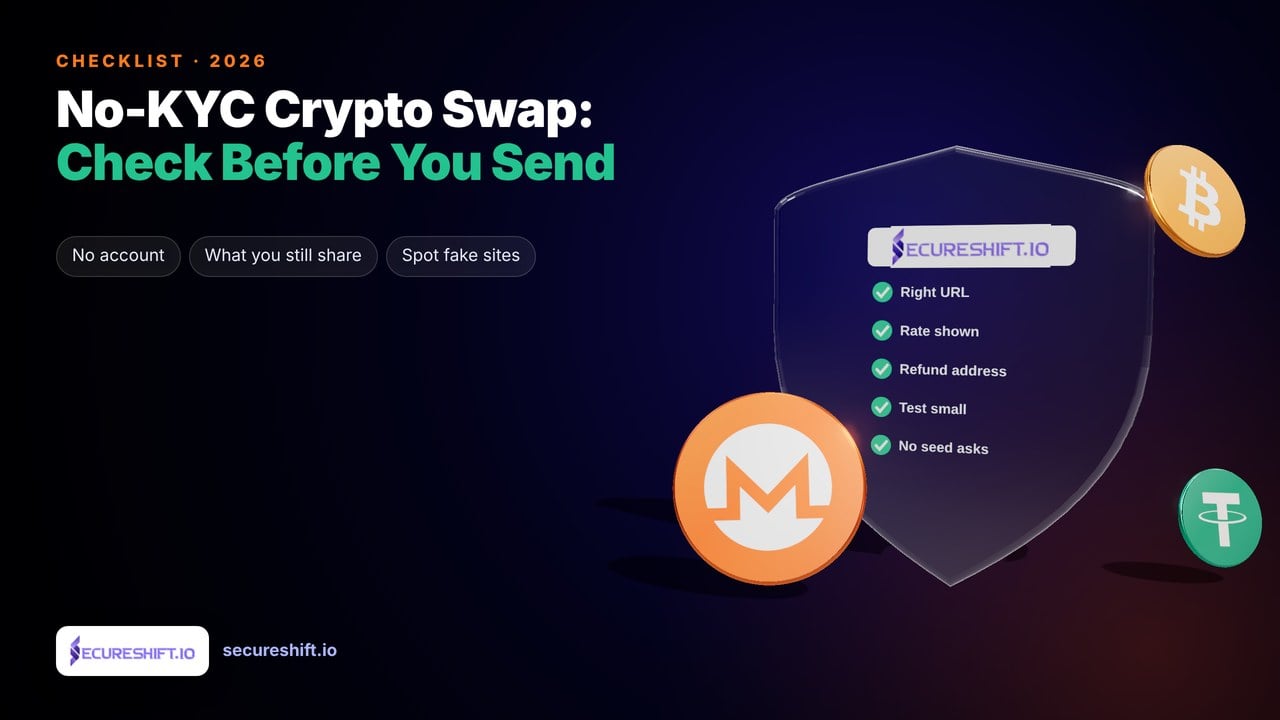
Trade-off: you trust the service to deliver once your deposit lands. Always add a refund address and start with a small amount.
SecureShift DEX lists Monero as a live network alongside Bitcoin, Ethereum, BNB Chain, Solana and Arbitrum. You enter the pair, the amount and a recipient address. No wallet connection is needed. If a swap fails, it's set up to refund automatically to your original address. It suits you if you hold tokens on other chains and want to go straight to XMR.
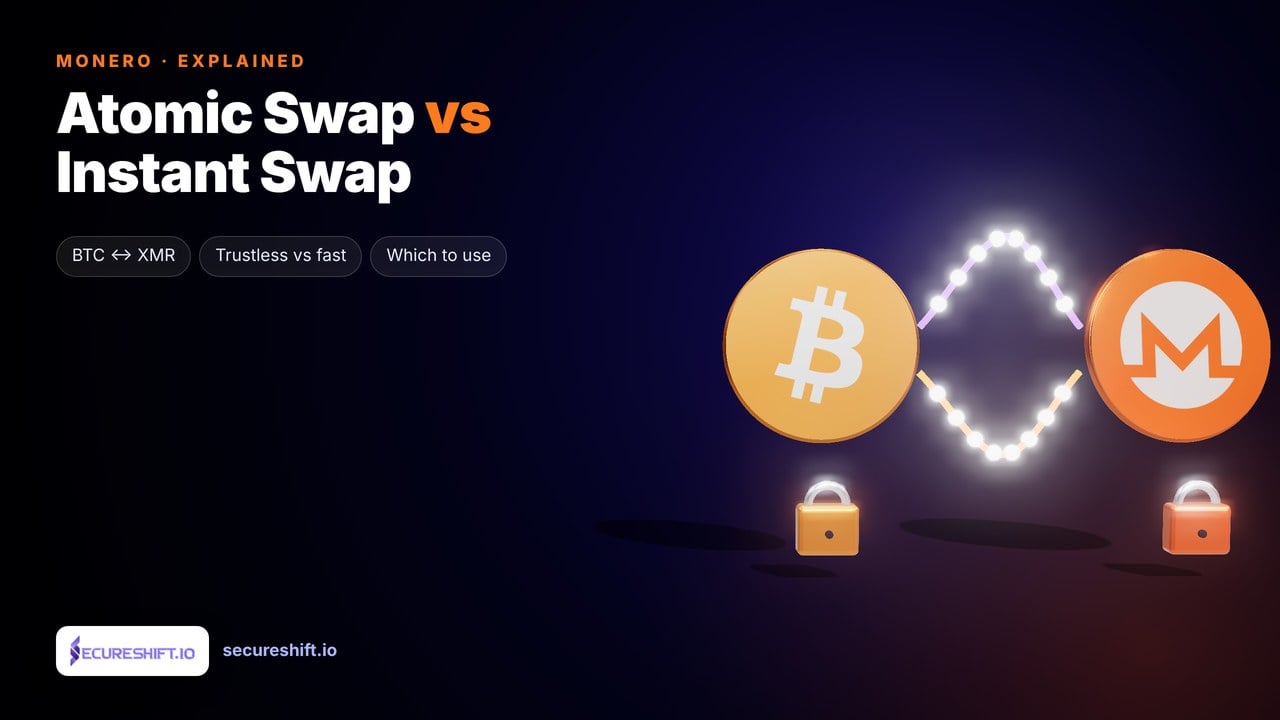
An atomic swap locks BTC and XMR on their own chains so that either both sides complete or both get refunded. No service ever holds your coins. The catch: it's mostly BTC-only, it needs desktop software (such as eigenwallet or BasicSwap) that you keep running, and if a swap stalls, refunds depend on timelocks that can take hours. It's great for privacy-maximalists with patience, and less great for a quick swap from ETH or stablecoins.
Peer-to-peer markets such as Haveno match you with a seller who accepts bank transfer or other payment methods, using multisig escrow and arbitrators. It's the only real way to go from fiat to XMR without an exchange account. Expect wider spreads, slower trades and more steps.

Waiting longer than expected? Check why crypto swaps get delayed. Sending USDT? Make sure you pick the right network first. Our TRC20 vs ERC20 vs BEP20 guide explains why.
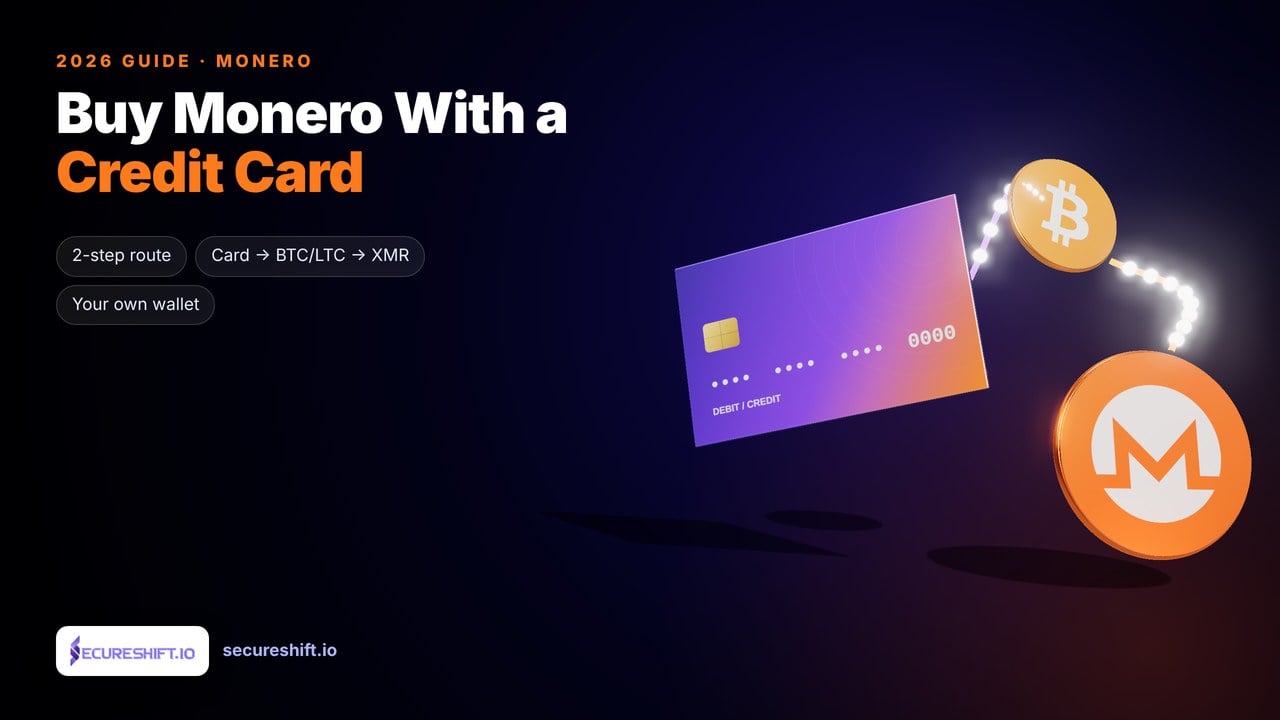
No-account swap services, SecureShift included, work crypto-to-crypto. They don't take cards or cash. The common route is two steps:
Be clear-eyed about what this achieves. The first purchase is still tied to your identity, and the withdrawal is visible on that coin's public chain. What you avoid is an exchange holding a record of you buying and holding Monero. Avoiding fiat altogether means a P2P market.

On Monero's own chain, privacy is on by default for every transaction:
What it does not hide:
What's next for Monero: FCMP++, an upgrade that replaces 16-member rings with proofs over the whole chain, is in public stress testing (stressnet v3.1 shipped October 26, 2026). As of today there is no mainnet activation date.
Ready when you are: swap BTC to XMR or ETH to XMR with no account, or route tokens through SecureShift DEX.
Yes. Swap a cryptocurrency you already own for XMR on a no-account swap service or DEX, use an atomic swap from BTC, or trade fiat for XMR on a P2P market. All of these pay XMR to a wallet you control.
Not directly on no-account swap services, which only accept crypto. The usual route is to buy BTC, LTC or USDT with a card (normally with KYC), withdraw it to your own wallet, then swap it to XMR without an account.
On SecureShift, the average BTC to XMR swap takes about 15–25 minutes, mostly waiting for Bitcoin confirmations. Received XMR becomes spendable after 10 Monero confirmations, about 20 minutes.
It depends on where you live. Owning XMR is legal in most countries, but rules for services and reporting vary, and tax obligations still apply. Check your local regulations; this guide is not legal advice.
Monero hides senders, receivers and amounts on its own chain. The coin you swapped from stays visible on its chain, though, and off-chain data like IP addresses or exchange records can still link activity to you.
A floating rate follows the market until your deposit arrives and then locks in. A fixed rate on SecureShift locks for 20 minutes after you press Exchange, so you know your exact XMR amount in advance.