Crypto Coin Guides 2027: Every Coin You...
2026-11-12

By the SecureShift Team · Updated November 12, 2026
Disclosure: SecureShift is a swap service, so we see the aftermath of these scams in our support chat every week. This guide is educational, not legal advice. If you've lost funds, report it to your local police or cybercrime unit.
Most crypto losses today come from being tricked, not from hacks. That means copying a poisoned address, signing a malicious approval, trusting a fake support agent, or paying a "recovery expert". Three habits stop most of it. Never share your seed phrase. Check the whole address before you send, not just the first and last characters. Never sign anything you didn't go looking for. No real exchange, wallet or swap service will ever DM you first.
We've watched the same pattern play out many times. Someone opens our support chat, calm at first, asking why their swap "didn't arrive". Five messages later it turns out they never used SecureShift. They found a lookalike site through an ad, or a "SecureShift support agent" messaged them on Telegram. The money is gone, and nothing on-chain can reverse it.
This guide exists so fewer people have that conversation. It's long, but each section stands on its own. Skim the headings, and read closely whichever one sounds like something you'd fall for. Everyone has one.
Something changed over the last couple of years. Big wallet-drainer losses have dropped. Scam Sniffer reported phishing losses fell about 83% in 2025, to roughly $84 million, as wallets got better at warning users. But attackers didn't disappear. They moved to cheaper, higher-volume tricks aimed at ordinary users: address poisoning, fake support, and long cons run over chat apps.
The common thread is that you press the button. Blockchains do exactly what a valid signature tells them to. That's why the defenses below are habits, not software.
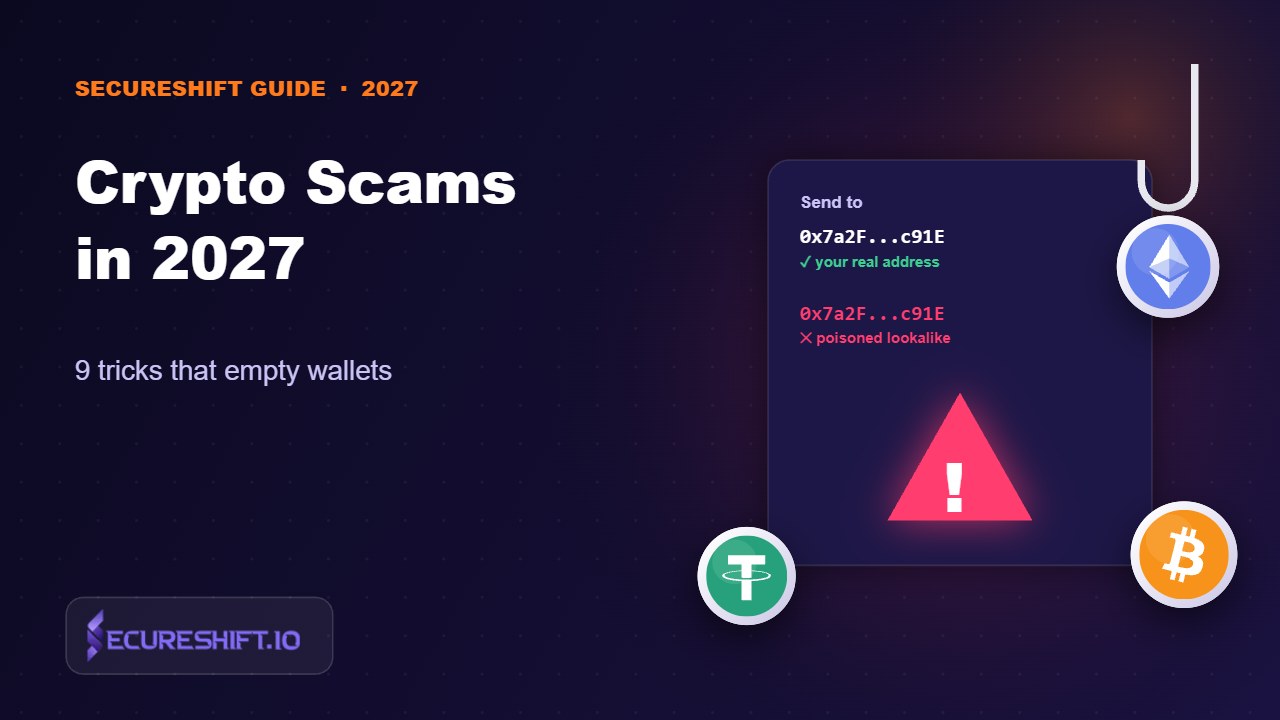
How it works: The scammer creates an address whose first and last few characters match one you've used, then sends you a tiny or zero-value transaction from it. Now the fake address sits in your history. Next time you copy "your usual address" from that history, you copy theirs.
Real case: In May 2024, one person sent 1,155 WBTC (about $68 million) to a poisoned address that matched the real one's first and last six characters. That attacker later returned the funds. Almost nobody else gets that lucky.
Defense: Never copy addresses from your transaction history. Use your address book, or copy straight from the recipient. Check the middle of the address too.
How it works: A fake airdrop, mint or "claim" page asks you to connect your wallet and sign. What you actually sign is a token approval or a permit signature that lets the attacker move your tokens whenever they want. Often nothing happens for hours, so you never connect the theft to the site.
Defense: Read what your wallet says you're signing. "Permit", "setApprovalForAll" and unlimited approvals on a site you just found are red flags. Revoke old approvals regularly with a reputable approval checker. Keep long-term savings in a wallet that never connects to dApps.
How it works: Malware on your computer or phone watches the clipboard. When you copy a crypto address, it silently swaps in the attacker's. You paste, you send, it's gone.
Defense: After pasting, compare the address against the source, all of it. Don't install cracked software or random browser extensions. If a swap form's "destination" ever looks different from what you copied, stop and scan your device.
How it works: You post a question publicly ("my transaction is stuck") and within minutes "support" DMs you. They're polite and fast, and eventually they need your seed phrase, a "validation" signature, or a payment to "unlock" your funds.
Defense: Real support never DMs first and never asks for a seed phrase. Contact support only through the official website you typed in yourself. SecureShift support is reached from secureshift.io, and we will never ask for your seed phrase or private key.
How it works: A site with a near-identical domain and copied design shows up in a sponsored search result. It gives you a "deposit address" that belongs to the scammer, and you never receive anything back.
Defense: Bookmark the real site and only use the bookmark. Skip sponsored results for anything financial. Check the exact domain spelling before sending.
How it works: A friendly stranger, often met through a "wrong number" text, a dating app or a social group, builds trust over weeks. Eventually they introduce a trading platform where your "profits" grow fast. You can withdraw a little at first. Then, when you deposit more, withdrawals need a "tax" or "fee", and then another one.
Defense: Anyone you've never met in person who brings up crypto investing is a red flag. A platform that asks you to pay before you can withdraw is a scam, every time.
How it works: A video or livestream of a famous founder promises to "double" any crypto you send. The video is often AI-generated, and the comments are full of bots claiming it worked.
Defense: No one doubles your crypto. Ever.
How it works: A new token pumps, and you buy in. Then you find the contract won't let you sell, or the developers pull the liquidity and vanish.
Defense: Check a token's contract before you buy. Can holders sell? Is liquidity locked? Is ownership renounced? Be most suspicious of tokens pushed in Telegram groups. We wrote up a real case in our meme token rug pull breakdown.
How it works: Right after a loss, "blockchain investigators" or "hackers" offer to recover your funds for an upfront fee. They target people who've posted about being scammed. Then they take the fee and disappear, or ask for more.
Defense: Legitimate recovery firms don't cold-message victims or ask for crypto upfront. Report losses to the police, and to the exchange the funds went to if you can identify it.
Instant swap users run into a few specific tricks. They're worth knowing on their own:
SecureShift never asks for your seed phrase, never DMs you first, and never charges a fee to "release" a swap. Bookmark the real site and swap from there.
Go to secureshift.ioNo. Confirmed blockchain transactions can't be undone. Sometimes a centralized exchange or a stablecoin issuer can freeze funds that reach them, which is why reporting quickly matters.
A scam where an attacker plants a lookalike address in your transaction history, hoping you'll copy it by mistake next time. Always copy addresses from the real recipient or your address book.
No. SecureShift never DMs users first and never asks for a seed phrase, a private key, or a fee to release a swap.
Be careful with unlimited approvals, "Permit" signatures and setApprovalForAll requests, especially on sites you just found. When in doubt, don't sign. Revoke approvals you no longer use.
Most that contact you after a loss are scams. Real investigators don't cold-message victims or demand crypto upfront.